Introduction to Python

What is Python?
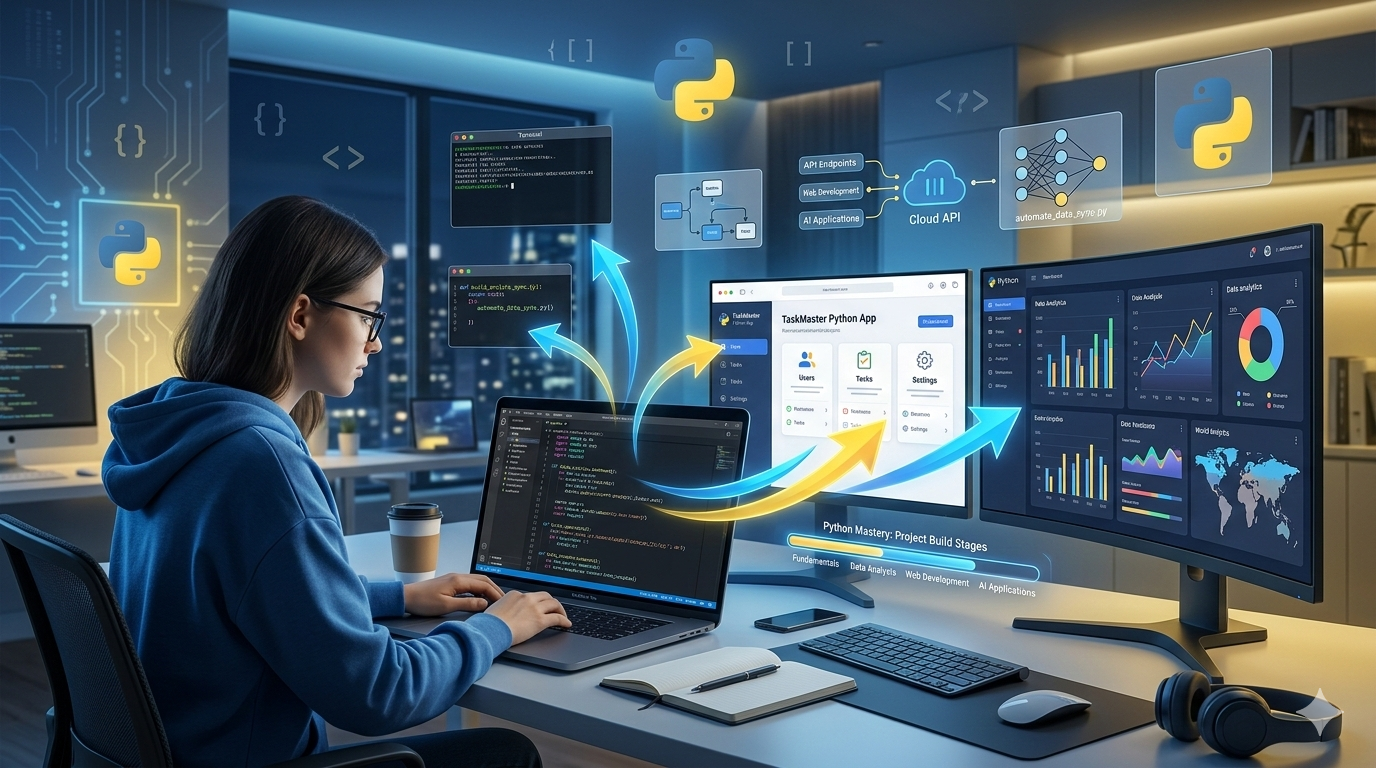
Python is one of the most powerful and beginner-friendly programming languages ever created, and it has completely transformed how people enter the world of coding. Python Full Course with Projects Developed by Guido van Rossum, Python was designed with a simple idea in mind: make programming readable, clean, and almost conversational. And honestly? It succeeded beyond expectations. When you look at Python code, it doesn’t feel intimidating or cryptic like some other programming languages. Instead, it feels approachable, almost like reading structured English. That accessibility is exactly why millions of beginners choose Python as their first language. But don’t mistake simplicity for weakness—Python is incredibly powerful and runs some of the biggest platforms and systems in the world today.
Why Python Dominates the Programming World
Python’s dominance isn’t an accident. It’s flexible, scalable, and adaptable across industries. Whether you want to build websites, automate boring office tasks, analyze massive datasets, develop artificial intelligence systems, or even create games, Python Full Course with Project has the tools and libraries ready for you. Major companies like Instagram and Spotify rely heavily on Python in their backend systems. That tells you something important—Python is not just for hobby projects; it’s production-grade and enterprise-ready. The language also has a massive community, meaning whenever you face a problem, someone else has probably solved it already. That support system dramatically speeds up your learning curve.
Setting Up Your Development Environment
Installing Python Correctly
Before writing your first line of code, you need to install Python properly. This step sounds simple, but it sets the foundation for everything else. When installing, always ensure that Python is added to your system PATH. Skipping that tiny checkbox during installation can cause frustrating command-line errors later. Once installed, verify it using the command line by typing python --version. If you see the installed version displayed, congratulations—you’re officially ready to code.
Python Full Course with Projects Choosing the Right Code Editor
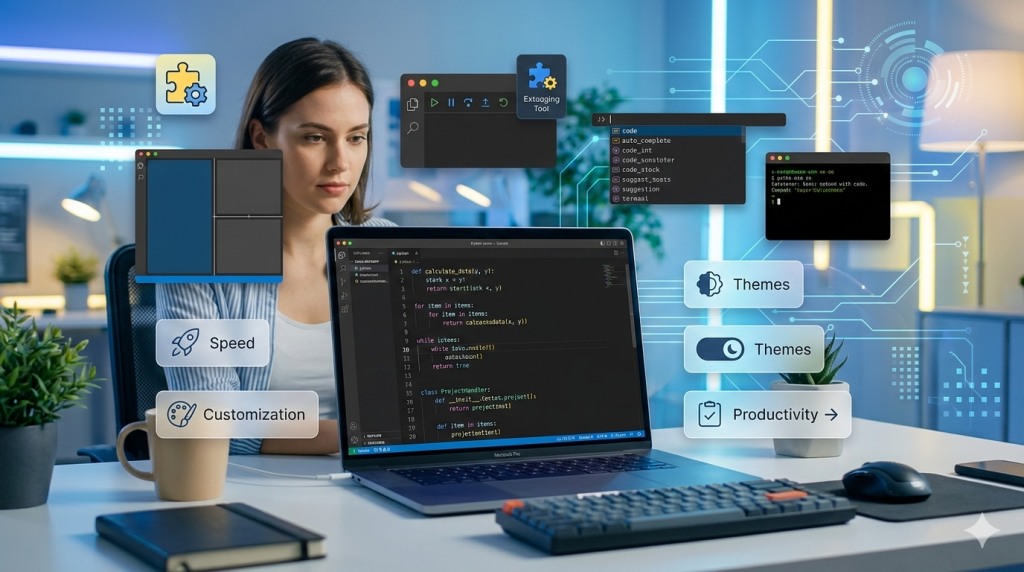
Your code editor is your workspace, your creative lab, your digital workshop. Two of the most popular options are Visual Studio Code and PyCharm. Visual Studio Code is lightweight, fast, and highly customizable with extensions. It’s perfect for beginners who want flexibility. PyCharm, on the other hand, offers powerful built-in tools for debugging and project management, making it ideal for larger applications. Choosing between them depends on your workflow preferences, but both are excellent starting points.
Python Fundamentals
Variables and Data Types
Python Full Course with Projects At the heart of Python are variables and data types. Variables store information, and data types define what kind of information you’re storing—numbers, text, or logical values. Python automatically detects data types, which removes a lot of unnecessary complexity. You don’t need to declare types explicitly like in many other languages. This dynamic typing makes development faster and smoother, especially for beginners who are still learning programming logic.
Operators and Expressions
Operators allow you to perform operations like addition, subtraction, comparison, and logical evaluations. They are the building blocks of decision-making in programs. Arithmetic operators help in calculations, comparison operators help in evaluating conditions, and logical operators help in combining multiple conditions. Once you understand operators, you can start building real logic instead of just printing text.
Control Flow and Logic Building
Control flow is where programming starts to feel powerful. Python Full Course with Projects Conditional statements like if, elif, and else allow your program to make decisions. Loops like for and while allow repetition without rewriting code multiple times. Think of loops as automation within your program—they repeat tasks until conditions are met. Mastering control flow is like learning how to think computationally. It shifts your mindset from “what do I want to print?” to “what logic should the computer follow?”
Functions and Modular Programming
Python Full Course with Projects Functions help you organize code into reusable blocks. Instead of rewriting the same logic repeatedly, you wrap it inside a function and call it whenever needed. This approach makes programs cleaner, easier to debug, and more scalable. As your projects grow, functions become essential. Advanced concepts like lambda functions and higher-order functions introduce even more flexibility, allowing you to write concise yet powerful code.
Data Structures in Depth
Python provides several built-in data structures such as lists, tuples, dictionaries, and sets. Lists store ordered collections and are mutable. Python Full Course with Projects Tuples are similar but immutable. Dictionaries store key-value pairs and are incredibly useful for structured data. Sets store unique elements and are great for eliminating duplicates. Understanding when to use each structure is critical. For example, if you need fast lookups by key, dictionaries are your best friend. If you need ordered sequences that can change, lists are ideal.
Object-Oriented Programming (OOP)
Object-Oriented Programming transforms how you structure applications. Python Full Course with Projects Instead of writing procedural code, you model real-world entities as objects. Classes define blueprints, and objects are instances of those blueprints. OOP introduces concepts like inheritance, encapsulation, and polymorphism, allowing you to create modular and reusable systems. Once you understand OOP, building large-scale applications becomes much more manageable and structured.
Python Libraries and Ecosystem
Python Full Course with Projects ecosystem is enormous. Libraries like NumPy and Pandas dominate data science. Matplotlib handles visualization. Requests makes API calls simple. For web development, frameworks like Flask provide lightweight solutions for building scalable applications. These libraries extend Python’s capabilities far beyond basic scripting and make it one of the most versatile languages available today.
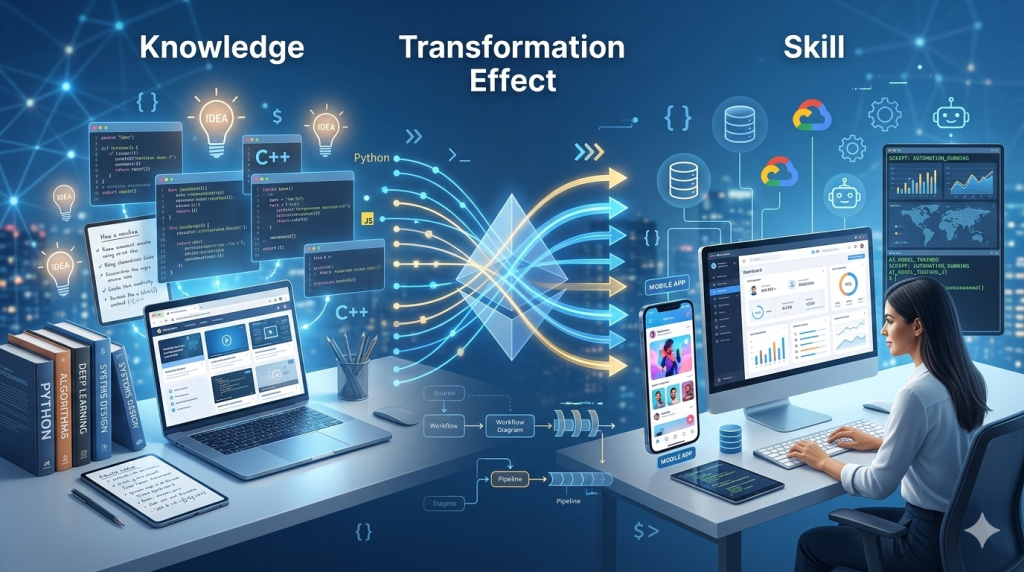
Projects: Turning Knowledge into Skill
Beginner Projects
Start simple. Python Full Course with Projects Build a calculator that performs arithmetic operations. Create a number guessing game using loops and random numbers. Develop a to-do list application that saves tasks to a file. These projects reinforce fundamentals and boost confidence.
Intermediate Projects
Move to more practical applications like a web scraper that extracts information from websites, an expense tracker that manages finances, or a weather app that pulls live data from APIs. These projects introduce real-world problem-solving.
Advanced Projects
At the advanced level, challenge yourself with a blog web application, a real-time chat app using sockets, or a data dashboard combining analysis and visualization. Python Full Course with Projects These projects simulate real software development environments and strengthen your portfolio.
Career Roadmap and Mastery Tips
Learning Python Full Course with Projects are one thing; mastering it is another. Consistent daily practice, building diverse projects, and contributing to open-source repositories can significantly accelerate your growth. Create a GitHub portfolio showcasing your work. Employers care less about certificates and more about proof of skills. Treat each project as a stepping stone toward expertise.
Conclusion
Python is more than just a programming language—it’s an opportunity engine. It opens doors to careers in web development, automation, data science, and artificial intelligence. Its simplicity lowers the barrier to entry, while its power ensures long-term growth. Python Full Course with Projects The real secret to success with Python isn’t just watching tutorials—it’s building, experimenting, failing, fixing, and repeating. If you stay consistent, the progress compounds over time. One small script today can evolve into a full-scale application tomorrow. Your journey starts with a single line of code—so why not write it now?